
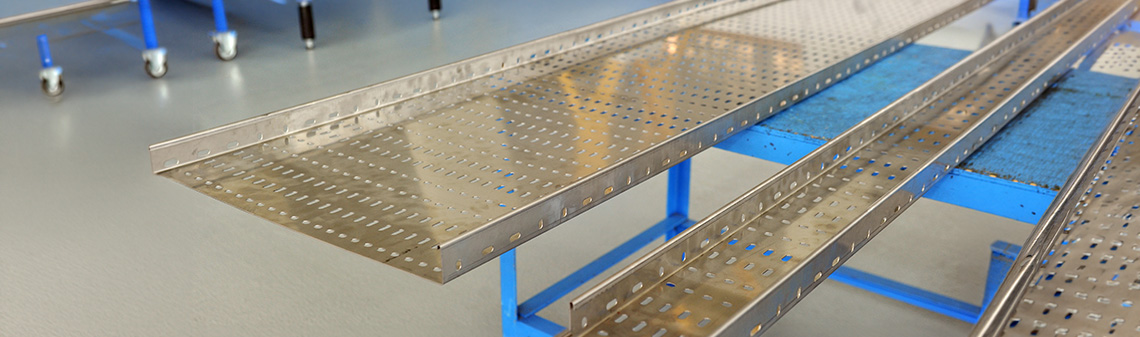
Cable Tray: The Future of Industrial Cable Management Systems
June 22, 2026Industrial systems are getting bigger and more complicated. These days factories have a lot of power cables, control cables, data lines, automation wiring and safety circuits all over the place. As the plant grows more machines are connected, but when the cables are not managed properly it can cause an issue.
Industrial cable management systems need to be organized, easy to access and should be able to grow with the plant. The goal is not just to hold cables in place. The system needs to support expansion, reduce downtime, and make the plant safer and make it easier to inspect the cables.
Cable tray systems are a way to manage cables. They create a path for cables and keep routes open for maintenance, ventilation and upgrades. For industries planning their infrastructure cable trays are a very practical choice for managing cables.
What Is a Cable Tray System?
A cable tray system is used to carry and organize cables in industrial, commercial and infrastructure projects. It provides a planned path for cables which are left exposed or routed through hard-to-reach spaces.
The purpose of cable trays is simple: to support cables safely, keep routing clean and allow technicians to inspect or modify the system when needed.
A complete cable tray system usually includes:
- Straight tray sections
- Tees
- Reducers
- Couplers
- Brackets
- Covers where protection is needed
- Earthing and bonding accessories
Different types of cable trays are used depending on the load, environment and application. The common options include cable ladder trays, perforated trays, wire mesh trays and raceway systems.
Elcon Global manufactures ladder cable trays, perforated cable trays, wire mesh cable trays, raceways, cable ducts, earthing materials, accessories and related support systems for instrumentation applications.
Why Traditional Cable Management Is Becoming Outdated?
For a time conduit systems were used for cable routing. They still work in applications, especially where cables need to be completely enclosed. For large industrial layouts conduit-based routing can become difficult to manage over time.
The discussion around cable tray vs conduit systems usually starts with access. Conduits hide cables inside enclosed pipes, which makes inspection and replacement slower. When new cables are added the system may need conduit runs, extra fittings and more installation time.
In growing facilities this creates some clear challenges:
- Maintenance takes longer because cables are harder to trace
- Expansion becomes complicated when new circuits are required
- Installation costs increase due to labor and material needs
- Heat dissipation can become a concern in cable routes
- Modifications may disturb existing electrical paths
Cable trays solve many of these problems by keeping cables supported, visible and easier to reach. This makes them suitable for plants where layouts, machines and production needs keep changing.
Advantages of Modern Cable Tray Systems:
Cable tray systems support smart cable management across industrial environments. They bring order into spaces where large volumes of wiring need to remain safe, accessible and ready for expansion.
-
Easy Installation -
Cable trays are easier to install across routes, open areas, ceilings, service floors and vertical sections. With the accessories installers can create bends, drops and turns without disturbing the overall pathway.
-
Better Airflow and Cooling -
Open tray designs allow ventilation around cables. This is especially useful for power cables and high-density routes where heat build-up can affect cable life.
-
Reduced Maintenance -
When cables are visible and properly arranged inspection becomes faster. Technicians can trace faults, check cable conditions and make changes without opening sealed pathways.
-
Flexibility for Expansion -
Cable management systems are important for industrial growth. Cable trays allow new cables to be added without rebuilding the route. This makes them useful for factories, warehouses, utilities and plants planning upgrades.
-
Safety -
Organized routing reduces cable stress, overcrowding and accidental damage. Proper segregation between power, control and data cables also supports electrical design.
-
Cost Efficiency -
Cable trays reduce labor complexity. Make future maintenance simpler. Over a project’s lifecycle this can help lower downtime and rework costs.
-
Better Cable Organisation -
Industrial wiring solutions need pathways. Cable trays make cable movement, routing and identification easier for engineering and maintenance teams.
These are the benefits of scalable cable management systems in industries where electrical reliability directly affects production and safety.
Types of Cable Trays Used in Industries:
There is no tray type that fits every industrial condition. The right choice depends on cable weight airflow needs, installation area and maintenance access.
1] Ladder Cable Tray -
Cable ladder trays are designed with two side rails connected by rungs. They are commonly used for power cables and long cable runs.
The best applications for ladder cable trays are:
- Power plants
- Manufacturing plants
- Heavy-duty routes
- Long-distance cable support
- High-load electrical pathways
Ladder trays provide strong support and allow excellent airflow around cables. Elcon’s ladder cable trays are used for power distribution, control and communication needs across applications.
2] Perforated Cable Tray -
A perforated cable tray has a base with openings that support ventilation and cable fixing. It gives cables base support while still allowing air movement.
The best applications for cable trays are:
- Control cables
- Instrumentation cables
- Mixed-service cable routes
- Industrial buildings
- Electrical layouts
A perforated cable tray is suitable when cables need organized support with moderate airflow and protection.
3] Wire Mesh Cable Tray -
Wire mesh trays are lightweight, open and easy to modify. They are commonly used in areas where frequent changes, drops or rerouting may be required.
The best applications for wire mesh cable trays are:
- Data centers
- IT rooms
- Automation zones
- Underfloor layouts
- High-density cable areas
Elcon’s wire mesh cable tray systems are designed for cable arrangement and can be installed on ceilings or walls. They are used across heavy power cable pathways, office buildings and data installations.
Industries Benefiting from Cable Tray Systems:
Cable tray systems are useful wherever electrical routing needs to stay organized, protected and easy to maintain.
1. Manufacturing Plants -
Manufacturing units depend on machines, control panels, sensors, drives and automation equipment. Cable trays help keep power and control wiring organized across production areas.
2. Oil and Gas -
Oil and gas facilities need cable support systems that can handle demanding environments. Ladder and perforated trays are commonly used for heavy-duty routing and long cable paths.
Also read our blog on Corrosion Resistant Cable Trays for Refineries
3. Data Centers -
Data center cable management depends on routing, airflow and fast access. Ladder, perforated and wire mesh trays are often used together based on load, cooling and cable density.
4. Power Plants -
Power plants need cable routes that can support loads and high operating demands. Ladder trays are often used for power routes while perforated and wire mesh trays support specific zones.
Also read our article on power plant cable management solutions
5. Commercial Buildings -
Commercial spaces need cable pathways that're neat, accessible and suitable for future tenant changes. Raceways, ducts and covered trays help protect cables in shared or high-traffic areas.
Get more information on 5 Innovative Uses of Wire Mesh Cable Trays in Commercial Buildings
6. Renewable Energy Projectsc -
Solar, wind and hydrogen-related infrastructure require cable systems that can support conditions, corrosion resistance and long-term scalability.
Future Trends in Industrial Cable Management:
The future of cable management systems is connected to smarter, safer and modular infrastructure. As industries adopt automation and digital monitoring cable routes will need to support cable density and easier upgrades.
1. Smart Factories -
Smart factories depend on sensors, PLCs, robotics and communication networks. These systems need structured cable routing to avoid faults and simplify troubleshooting.
2. IoT-Enabled Monitoring -
IoT-enabled monitoring may help maintenance teams track cable temperature load conditions and system performance across routes.
3. Fire-Resistant Materials -
Fire safety will continue to influence cable tray design in tunnels, plants, metro systems and commercial facilities.
4. Sustainable Cable Tray Materials -
Industries are also looking at energy- cable management solutions with durable materials, long service life and reduced replacement needs.
5. Modular Infrastructure -
Modular tray systems allow changes during expansion or equipment relocation. This is useful for plants where production lines evolve over time.
6. AI-Driven Maintenance Systems -
AI-driven maintenance can support fault prediction, inspection planning and route monitoring. But for these systems to work well the physical cable infrastructure needs to be organized.
How to Choose the Right Cable Tray?
Choosing the best cable tray for industrial applications depends on the project’s electrical load, environment and future expansion needs.
Key factors include:
1. Load -
Power cables and data cables and control cables and low-voltage lines should be routed with separation wherever it is required. This is very important for safety.
2. Material Selection -
The material should match the site conditions, cable load, and safety requirements.
3. Installation Area -
Ceiling runs, vertical risers, utility passages, floors, and machine zones may each require different tray types.
4. Compliance Standards -
Industrial sites should consider electrical safety, earthing, bonding, firestopping, and installation standards before finalising the tray system.
If we do not plan this properly the cables can get damaged.
Installation & Maintenance Best Practices:
A cable tray is only effective when it is installed correctly. Below factors should be considered for the best practices of the cable tray installation, management and maintenance:
1. Grounding -
We need to make sure that metal trays are properly bonded and earthed to maintain continuity and reduce safety risks. This will help prevent accidents and keep people safe.
2. Support Spacing -
Support spacing should be planned based on the type of tray and the cable load and the route design. This helps avoid sagging and stress on the cable support systems.
3. Routine Inspection -
Cable tray installation should be followed by checks. Teams should inspect the tray alignment, support, corrosion, cable load, and the bonding continuity. This is very important to make sure everything is working properly.
The right type of cable tray can make a difference in maintenance and safety and future upgrades. We need to think about this.
Conclusion:
Cable trays are becoming an important part of modern industrial cable management. They help facilities organise the wiring and improve access and support expansion and maintain electrical pathways. This is very useful for industries. As industries move towards automation and smart factories and modular infrastructure, energy-efficient cable management solutions need to be planned with long-term use in mind.
Elcon Global best cable tray manufacturer, offers cable tray systems and raceways and ducts and accessories and support solutions for commercial electrical infrastructure. If you need help you can contact their experts for the future of industrial cable management systems.
FAQs:
1. What is the purpose of a cable tray system?
A cable tray system routes and organizes electrical cables across industrial and commercial spaces. It helps improve cable access and safety and ventilation and maintenance.
2. Which cable tray is best for use?
The best cable tray for applications depends on the cable load and the site requirement.
3. What materials are used in cable trays?
Cable trays are commonly made from steel and stainless steel and aluminium. Finishes can include -galvanised and hot-dip galvanised and powder-coated and painted and electroplated options depending on the environment and corrosion requirement.