
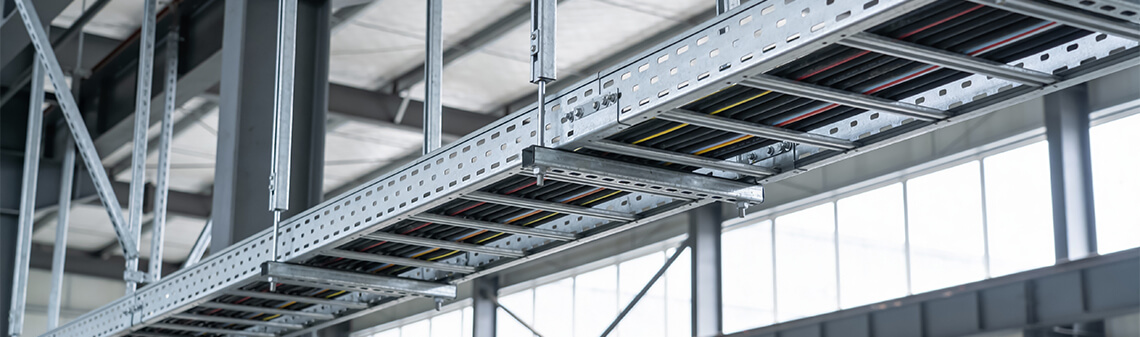
How Cable Management Reduces Downtime and Improves Safety?
June 26, 2026Cable Management: Reducing Downtime and Improving Safety in Industrial Facilities
Cable management is really important for facilities. It is not only about connecting equipment, it is about supporting production lines, control panels, automation systems, safety devices, communication networks and power distribution. When cables are not routed or protected properly even a small fault can slow down operations and create safety risks.
A planned cable management system helps avoid these issues by giving every cable a defined route, proper support and easier access for inspection. This keeps wiring organized and reduces stress on cables which helps maintenance teams to identify problems before they affect production.
Cable management is part of an electrical infrastructure that supports long-term operational reliability.
Why Cable Management Matters in Industrial Facilities?
Industrial environments are constantly changing. Machines are added, production lines are expanded, panels are also upgraded, and new automation systems are introduced. Without cable routing systems these changes can create overcrowded pathways, tangled wiring and difficult-to-trace cable routes.
Poor cable organisation can lead to problems such as:
- Maintenance time accidental cable damage
- Cable overheating
- Electrical faults
- Equipment shutdowns
- Safety hazards for workers
- Difficulty during inspections.
This is why cable management safety plays a role in industrial planning. A clean and structured system gives maintenance teams visibility and reduces the chances of unexpected failures.
How Cable Management Reduces Downtime?
Cable management reduces downtime by keeping cables organised, accessible and protected. This helps technicians trace faults faster, and inspect cable routes easily and complete repairs without disturbing the electrical system.
A good cable management system supports downtime reduction strategies in the following ways:
1. Faster Fault Detection
When cables are arranged in pathways technicians can trace them faster. Labels, routes and open tray systems help maintenance teams identify the affected cable without disturbing the rest of the setup.
2. Easier Maintenance Access
Cable organization systems make routine maintenance more efficient.Instead of opening closed pathways or moving tangled cables technicians can inspect cable trays, supports and routing paths directly. This is especially useful in manufacturing plants, power plants and commercial facilities where downtime can affect operations.
3. Better Cable Protection
Proper cable support reduces bending, sagging, pulling and pressure on cable jackets. When cables are protected from stress the risk of damage reduces. This helps prevent failures caused by crushed, stretched or improperly supported cables.
4. Cleaner Expansion Planning
This allows new cables to be added without disturbing existing paths. This makes upgrades or additions smoother and reduces the chance of accidental shutdowns during expansion work.
How Cable Management Improves Safety?
Cable management also improves safety. Workplace electrical safety depends on how cables are routed, protected and maintained. Poor cable management can expose workers to risks such as tripping, accidental contact, electrical faults and overheating.
A structured cable management setup works as one of the practical electrical safety solutions for industrial environments.
1. Reduces Cable Overheating
Cable overheating prevention is an important part of industrial safety. When cables are packed too tightly or routed through poorly ventilated spaces, heat can build up around them.
Cable trays, wire mesh trays and ladder trays allow better airflow around cables. This helps reduce heat accumulation and supports longer cable life.
2. Prevents Accidental Damage
In busy industrial areas, cables can be exposed to tools, movement, machinery vibration and maintenance activity. Supported and protected routes reduce the risk of cuts, crushing or accidental pulling.
Covered trays, raceways and ducts can also be used in areas where cables need additional protection.
3. Supports Proper Cable Segregation
Power cables, control cables, data cables and low-voltage cables should not always run together. Poor segregation can create interference, faults and safety concerns.
Cable routing systems help separate different cable types and maintain cleaner electrical pathways.
4. Reduces Trip and Contact Hazards
Loose cables on floors or unmanaged routes near work areas can create safety risks. Overhead cable management helps keep cables away from worker movement and machinery paths.
This is useful in manufacturing plants, warehouses, utility areas and production floors where open floor space needs to remain safe.
Role of Cable Management in Manufacturing Plant Safety:
The role of cable management in manufacturing plant safety is very important. Manufacturing plant safety depends on machines, controlled electrical systems and safe movement across the facility. Since production areas often have machines running together cable routes must be strong, visible and easy to maintain.
A planned cable management system helps manufacturing plants by:
- Keeping power and control wiring organised
- Reducing cable stress near machines
- Supporting automation and sensor wiring
- Making electrical inspections easier
- Avoiding cable clutter near work zones
- Supporting production line expansion
When cable paths are designed properly maintenance teams can work faster. Workers face fewer avoidable electrical risks.
Cable Management for Power Plant Cable Safety:
Cable management for power plant cable safety is also crucial. Power plants require cable systems that can handle loads, long cable routes and high operational demands.
In environments power plant cable safety becomes a key part of electrical planning. Cable trays are commonly used in power plants because they provide support for heavy cables and allow better access for inspection. Ladder trays are often preferred for power cables while perforated trays and wire mesh trays may be used for control, instrumentation and communication routes.
A structured setup helps to maintain the following:
- Cable separation
- Better load distribution
- Easier inspection access
- Reduced overheating risk
- Clear cable identification
- Stable cable support over long distances.
This makes cable management important for both safety and uninterrupted power operations.
Types of Cable Management Systems Used in Industries:
There are types of cable management systems used in industries. The choice depends on cable load, installation area, environment and access requirements.
1. Ladder cable trays
Cable ladder trays are suitable for heavy-duty cable routes and long-distance runs. They provide support and allow good airflow around cables.
2. Perforated cable trays
Perforated cable trays provide base support with ventilation. They are useful for cable routes and areas where cables need stable support.
3. Wire mesh trays
Wire mesh cable trays are lightweight, open and easy to modify. They are useful where frequent cable changes or drop-outs are needed.
4. Raceways and cable ducts
Raceway cable trays protect cables in enclosed routes. They are useful in areas where cables need to be shielded from impact, dust or contact.
Elcon Global’s Approach to Cable Management:
Elcon Global manufactures cable trays, wire mesh trays, ladder cable trays, perforated cable trays, raceways, cable ducts, earthing materials, accessories and related support systems for commercial electrical infrastructure.
Their product range supports organised cable routing, overhead cable management, cable protection and long-term system reliability. With options across steel, stainless steel, aluminium and different finishes Elcon provides cable support solutions suited for varied industrial environments.
For industries looking to improve workplace safety and reduce downtime, choosing the right cable management products can make daily operations easier to maintain and safer to manage.
Best Practices for Safer Cable Management:
There are practices for safer cable management. A cable management system works best when it is planned and maintained properly. Industries should plan cable routes early to maintain tray fill, separate cable types use proper supports to check for corrosion and damage ensure grounding and bonding. Metal cable trays should be properly bonded to maintain electrical continuity and improve safety.
Conclusion:
Cable management plays a role in reducing downtime and improving safety across industrial facilities. When cables are routed properly they are easier to inspect, safer to maintain and less likely to fail. We understand that industries are moving towards automation, machines and larger electrical networks. Hence, structured electrical infrastructure becomes even more important.
A planned cable management system supports safer workplaces, smoother maintenance and better operational efficiency. Elcon Global offers cable trays, raceways, ducts, accessories and cable support systems for commercial applications. Contact our experts for cable management solutions.
FAQs:
1. How does proper cable management reduce downtime?
Proper cable management reduces downtime by keeping cables organised, accessible and protected. This helps technicians trace faults faster, inspect cable routes easily and complete repairs without disturbing the entire electrical system.
2. Why is cable management important for workplace safety?
Cable management is important for workplace safety because it reduces cable clutter, prevents accidental damage, supports cable segregation and lowers the risk of overheating, tripping and electrical faults.
3. Can poor cable management cause equipment failure?
Poor cable management can cause equipment failure. Overcrowded cables, poor ventilation, damaged insulation, loose routing and improper support can lead to overheating, faults and unexpected shutdowns.
4. How can cable management improve operational efficiency?
Cable management improves operational efficiency by making maintenance faster, supporting easier upgrades, reducing fault-related delays and keeping electrical routes clean, accessible and reliable.