
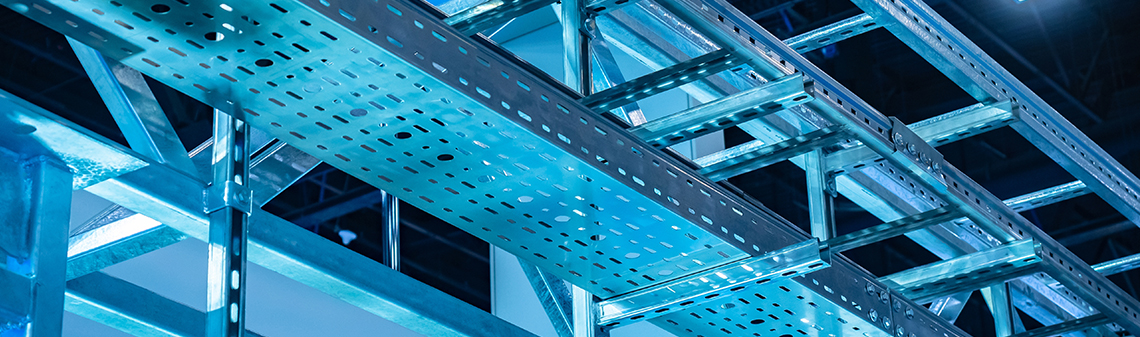
Why Your Cable Tray is Rusting And How to Fix It?
August 24, 2026Cable trays are an important part of any electrical or industrial setup. They support, organise and protect cables across factories, commercial buildings, data centres, power plants, process industries and infrastructure projects. When cable tray rusting starts it is not something that should be ignored.
Rust may look like a surface-level problem at first. A few brown patches or slight discolouration may not seem serious. However, if it is left untreated, rust can slowly affect cable tray durability, reduce load-bearing strength, damage coatings and increase maintenance costs over time.
In cases, cable tray corrosion happens because the tray is exposed to moisture, chemicals, humidity, dust, poor ventilation or the wrong installation environment. The good news is that cable tray rusting can be controlled, repaired and prevented with the material selection, coating, installation method and maintenance routine.
Let us understand why your cable tray is rusting and how to fix it properly.
What Causes Cable Tray Rusting?
Cable trays are usually made from metal because they need strength, stability and long service life. However, metal can react with air, water and environmental contaminants. This reaction leads to rust or corrosion.
Here are the common reasons behind cable tray rusting.
1. Exposure to Moisture -
The biggest cause of cable tray corrosion is exposure to moisture. When water stays on the cable tray surface for a time it reacts with the metal and starts forming rust.
Even small amounts of water can cause damage if the cable tray surface is not protected properly. Over time moisture weakens the coating. Reaches the base metal.
2. Water Ingress in the Installation Area -
Water ingress means water entering an area where it should not be present. This can happen due to rainwater leakage, poor drainage, pipe leakage, condensation or improper sealing.
If water collects around cable trays or keeps dripping on them, rusting becomes faster. This is especially common in cable routes, underground areas and poorly ventilated industrial spaces.
3. High Humidity -
Cable tray rusting does not always need water contact. Even high humidity can lead to corrosion.
In humid environments, moisture remains present in the air. This moisture settles on the cable tray surface and slowly reacts with the metal. Locations near the sea, chemical plants, cooling towers and process industries often face this problem.
4. Damaged Protective Coating -
Most cable trays come with some form of cable tray protection, such as galvanising, powder coating, paint or other anti-rust coating. This coating works as a barrier between the metal and the external environment.
However, if the coating gets scratched during transportation, handling, installation, cutting, drilling or cable pulling the exposed area can start rusting.
5. Wrong Material Selection -
Not every cable tray is suitable for every environment. A cable tray used inside a commercial building may not perform the same way in an outdoor coastal, chemical or high-moisture environment.
For example, if a standard mild steel cable tray is used in a corrosive area without suitable protection; rusting can begin much earlier than expected.
6. Chemical Exposure -
In industrial environments, cable trays may be exposed to chemical fumes, acidic vapours, salts, oil, gases or process dust. These substances can react with metal surfaces and damage the protective coating.
Chemical exposure can make corrosion faster and more aggressive than rusting. In such cases, basic coating may not be enough. The project may need steel, hot-dip galvanised or specially coated cable trays depending on the environment.
7. Poor Cable Tray Maintenance -
Like any other part of industrial infrastructure cable trays also need inspection. If dust, moisture, chemicals, bird droppings or debris remain on the cable tray for a long time; then corrosion can start.
Regular cable tray maintenance helps identify signs of rust before they become serious.
How to Fix Cable Tray Rusting?
Once rust appears the first step is to check how deep the damage is. Not every rusted cable tray needs replacement. Some cable trays can be repaired with rust removal techniques and anti-rust coating. However, if the cable tray has become weakly cracked, heavily corroded or structurally unsafe replacement is the option.
Here is how you can fix cable tray rusting.
1. Inspect the Rusted Area -
Start with a detailed inspection. Check whether the rust is on the surface or whether it has started affecting the cable tray thickness and strength.
Look for:
- Brown or red rust patches
- Flaking coating
- Pitting on the metal surface
- Loose joints
- nuts, bolts and supports
- Water marks
- Bending or weakening of the cable tray
- Sharp edges caused by corrosion
If the rust is limited to the surface it can usually be cleaned and recoated. If the cable tray has lost strength it should be replaced.
2. Remove Surface Rust -
For minor rusting, use proper rust removal techniques. The rusted area should be cleaned using a wire brush, sandpaper, scraper or mechanical cleaning tool depending on the severity.
The goal is to remove rust, dust, old flaking paint, oil and contaminants from the surface.
After cleaning, wipe the area properly. Make sure it is dry before applying any coating. Applying coating on a dirty surface will reduce its effectiveness.
3. Apply Anti-Rust Coating -
Once the rust is removed apply an anti-rust coating. This helps to protect the exposed metal from corrosion.
Depending on the installation environment the coating may include:
- Rust converter
- Zinc- primer
- Epoxy coating
- Protective paint
- Powder coating touch-up
- Galvanising repair compound
The coating must be applied evenly and allowed to dry properly. In high-moisture areas stronger coating systems may be required.
4. Replace Severely Corroded Sections -
If rust has deeply damaged the cable tray, repairing it may not be enough. A corroded cable tray can lose its load-bearing capacity and may become unsafe for cable support.
Replace sections that show:
- Deep pitting
- Holes in the cable tray
- Severe metal thinning
- Cracks
- side walls
- Weak joints
- Unstable support
Replacement is especially important in areas carrying heavy power cables, critical control cables or communication cables.
5. Improve Drainage and Ventilation -
If the root cause of the rusting is water ingress, leakage or high humidity simply cleaning the rust will not solve the problem. The same issue will return.
Improve the surrounding conditions by:
- Fixing leakage points
- Providing drainage
- Avoiding water accumulation
- Improving airflow
- Keeping cable trays away from direct dripping points
- Using tray covers where required
- Maintaining proper installation slope in outdoor areas
How to Prevent Cable Tray Rust in the Future?
Prevention is always better than repair. If cable tray protection is planned properly from the beginning, the system can perform reliably for years.
Here are some cable tray maintenance tips and prevention methods.
1. Choose Corrosion-Resistant Cable Trays -
The way to prevent cable tray rusting is to select the right cable tray for the environment. For harsh conditions, corrosion-resistant cable trays such as stainless steel hot-dip galvanised, powder coated or specially coated cable trays can offer better protection.
The choice depends on where the cable tray will be installed and what kind of exposure it will face.
2. Use the Finish -
Finishing plays a very important role in cable tray durability. A good finish protects the metal from moisture, dust and chemical exposure.
Common finish options include galvanised, powder coated, painted, electroplated and stainless steel finishes. For industrial use finish selection should be done carefully based on corrosion risk.
3. Handle Cable Trays Carefully During Installation -
Many corrosion issues begin during installation. Scratches, cuts, drilling marks and damaged edges can expose the base metal.
To prevent this:
- Avoid dragging cable trays on surfaces
- Use proper lifting and handling methods
- Touch up cut edges immediately
- Protect drilled areas
- Use compatible fasteners
- Avoid damaging the coating while pulling cables
Small precautions during installation can prevent major rusting problems later.
4. Schedule Regular Cable Tray Maintenance -
A regular inspection schedule helps detect rust. The frequency depends on the environment. Outdoor coastal, chemical and high-humidity areas should be inspected often.
A good maintenance checklist should include:
- Cleaning dust and debris
- Checking for water accumulation
- Inspecting coating damage
- Checking joints and fasteners
- Looking for rust patches
- Ensuring proper ventilation
- Checking tray covers and supports
This simple routine can improve cable tray protection and extend service life.
5. Avoid Mixing Incompatible Metals -
When different metals come in contact with each other in the presence of moisture corrosion can increase. This is known as corrosion.
To reduce this risk use accessories, fasteners, supports and clamps. If different metals must be used suitable insulation or protective barriers should be added.
6. Use Tray Covers Where Needed -
In some areas, tray covers can provide protection from water, dust, falling particles, sunlight and chemical exposure. However, covers should be selected carefully because some cable systems also need ventilation.
The right balance between protection and airflow is important.
Final Thoughts:
Cable tray rusting is not a small problem. It is a sign that the cable tray is exposed to moisture, water ingress, high humidity, coating damage, chemical exposure or poor maintenance conditions. If ignored, rust can reduce cable tray durability and affect the reliability of the entire cable management system. Cable tray rusting can be prevented with the right techniques and precautions. Regular maintenance and inspection are key to extending the life of your cable trays. By following these tips you can keep your cable trays in good condition and ensure the reliability of your electrical or industrial setup.
At Elcon Global we make cable trays to help keep cables organised and working well in all sorts of places like factories, offices and big infrastructure projects. If you use the kind of material, finish and way to protect the cable trays they can work properly even in tough environments.
If you are planning a new cable tray installation or facing repeated cable tray corrosion issues, choosing the right product at the beginning can save time, maintenance cost, and future replacement challenges. Contact us now.
FAQs:
1. Why is my cable tray rusting?
Your cable tray is rusting mainly due to moisture, humidity, water leakage, damaged coating, or exposure to corrosive environments.
2. How can I prevent my cable tray from rusting?
You can prevent rusting by choosing the right material, applying protective coatings, avoiding water exposure, and following regular maintenance.
3. What are the common causes of cable tray corrosion?
Common causes include moisture, water ingress, high humidity, chemical exposure, poor ventilation, coating damage, and wrong material selection.
4. Can a rusty cable tray be repaired?
Yes, minor rust can be repaired using proper cleaning, rust removal techniques, and anti-rust coating.
5. Which cable tray material is best for corrosion resistance?
Stainless steel, hot-dip galvanised, and specially coated cable trays are best for corrosion resistance.
6. How do protective coatings help prevent cable tray corrosion?
Protective coatings create a barrier between the metal and moisture, helping reduce rust and corrosion.
7. When should I replace instead of repair a rusty cable tray?
Replace the cable tray when rust has caused deep pitting, holes, cracks, weak joints, or loss of structural strength.